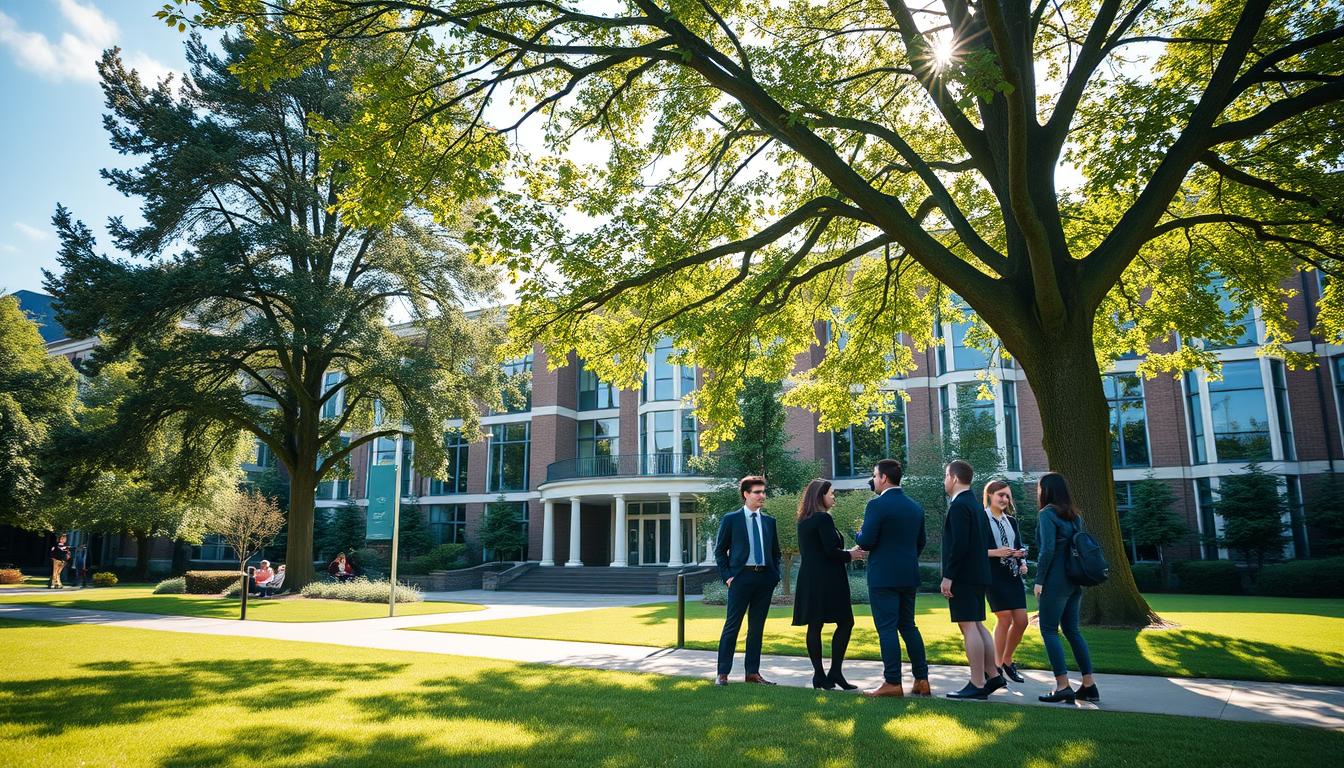
Study Beyond Borders: Canada’s ELAP Scholarships for Latin American and Caribbean Students
The Emerging Leaders in the Americas Program (ELAP) is a Canadian government scholarship opportunity designed to support short-term academic exchanges and research experiences for students from Latin America and the Caribbean.
For students in Brazil, one of the opportunities available for the 2026/2027 academic year is being organized through the partnership between the Consórcio das Universidades Comunitárias Gaúchas (COMUNG) and the CALAREO consortium.
The opportunity is particularly relevant for students who want to gain international academic experience without enrolling in a complete degree program in Canada. Depending on their academic level and host institution, selected participants can take courses, conduct research, contribute to projects, develop practical activities, and participate in intercultural experiences.
The Canadian government states that ELAP supports short-term study and research at Canadian post-secondary institutions and aims to strengthen institutional partnerships and people-to-people connections between Canada and countries across Latin America and the Caribbean.
For the 2026/2027 cycle, the official Canadian program provides scholarships of CAD 8,600 for four months or one academic term for eligible undergraduate or graduate study/research, while graduate students undertaking five to six months of study or research may receive CAD 12,400.
Students interested in future opportunities should understand that ELAP is not a conventional scholarship where an individual simply submits an application directly to the Canadian government. Under the current delivery model, Canadian post-secondary institutions identify and select eligible students and submit their scholarship applications to Global Affairs Canada.
What Is the Emerging Leaders in the Americas Program?
The Emerging Leaders in the Americas Program, commonly known as ELAP, was established by the Government of Canada in 2009.
Its purpose is to create short-term academic mobility opportunities for students from eligible countries in Latin America and the Caribbean. Rather than funding an entire undergraduate or graduate degree, ELAP supports temporary academic experiences in Canada.
These experiences can include:
- Undergraduate academic exchanges
- Graduate-level research
- Short-term research projects
- Participation in projects at a Canadian institution
- Practical academic activities
- Intercultural and academic experiences
- Collaboration between students and Canadian researchers
The program is available to students from a broad range of eligible countries and territories in the Americas. Brazil is specifically included among the eligible South American countries.
For Brazilian students, the Canada-Brazil education relationship is particularly significant. Brazil is one of the major beneficiaries of ELAP in Latin America.
How the CALAREO-COMUNG Partnership Works
For the 2026/2027 cycle, Brazilian students connected to participating COMUNG universities have access to a specific institutional pathway involving COMUNG and CALAREO.
The COMUNG call explains that the program can support students who want to develop research, participate in projects at a Canadian host institution, undertake practical activities, or gain international and intercultural experience.
This is important because the application process has several stages.
A student does not simply choose any Canadian university and submit an ELAP application independently. Instead, students participating through the COMUNG pathway must first follow the Brazilian institutional selection process. Candidates are then nominated for consideration by the Canadian institutions involved in the partnership.
The final decision is made in Canada by the host institution and the relevant Canadian program authorities. The COMUNG 2026/2027 call states that the final number of selected students is determined by the Canadian host institution and the Canadian Bureau for International Education (CBIE).
Who Can Apply Through the COMUNG 2026/2027 Call?
The COMUNG 2026/2027 call is directed toward students enrolled in participating institutions and includes undergraduate and graduate students.
According to the published call, candidates must:
- Be regularly enrolled in an undergraduate program or in a Master’s or Doctoral program at an eligible COMUNG institution.
- Maintain their academic connection with the Brazilian university from the time of application through the academic exchange.
- Demonstrate knowledge of English.
- Meet additional requirements established by the selected Canadian institution or academic program.
The call covers students from all areas of knowledge, although individual Canadian institutions may impose additional academic or research requirements.
One important distinction concerns undergraduate students. Under the COMUNG call, undergraduate eligibility is specifically associated with the Thompson Rivers University (TRU) opportunity, while the other listed opportunities are focused on graduate-level research.
Therefore, students should not assume that every Canadian institution listed in the call is available to every academic level.
English Language Requirements
English proficiency is an important part of the application process.
The COMUNG 2026/2027 call indicates that international English-language certificates may be accepted when they were issued within the previous two years and comply with the rules of the relevant Canadian institution.
The call also recommends the Duolingo English Test (DET) and references a minimum score of 115 as a recommendation for candidates, while noting that requirements can vary according to the participating institution.
Students should therefore verify the precise language requirement before applying.
A useful preparation strategy is to:
- Identify the Canadian institution of interest.
- Check its language requirements.
- Determine which tests are accepted.
- Take the test early enough to receive the result before the application deadline.
- Keep the official score documentation available.
Language preparation can also strengthen the academic experience after arrival, particularly for research discussions, presentations, classroom participation, and communication with supervisors.
How Much Does the ELAP Scholarship Pay?
The 2026/2027 ELAP funding levels published by the Government of Canada are:
| Study level | Duration | Scholarship |
|---|---|---|
| Undergraduate | 4 months / one academic term | CAD 8,600 |
| Graduate — Master’s or PhD | 4 months / one academic term | CAD 8,600 |
| Graduate — Master’s or PhD | 5–6 months | CAD 12,400 |
These amounts are the official scholarship values for the 2026/2027 program cycle.
The Government of Canada also identifies eligible expenses associated with the scholarship, including airfare, selected living expenses, health insurance, visa or study/work permit fees, and other eligible expenses.
However, students should not interpret the scholarship as unlimited financial coverage.
The official program states that tuition is not an eligible expense because Canadian institutions participating in ELAP must waive tuition fees for scholarship recipients.
Students should therefore create a realistic personal budget for expenses that may remain outside the scholarship’s eligible coverage, including food, local transportation, books, personal expenses, and other costs associated with living abroad.
Canadian Universities Participating in the COMUNG-CALAREO Opportunity
The 2026/2027 COMUNG call identifies several Canadian institutions available through the partnership.
These include:
Lakehead University
The opportunity is focused on Master’s and Doctoral students conducting research.
The COMUNG call specifies a maximum of two nominations from a single Brazilian institution for this destination.
Memorial University of Newfoundland
The opportunity is aimed at Master’s and Doctoral students undertaking research.
The published call does not establish a limited number of vacancies for this institution.
York University
York University is listed for Master’s and Doctoral research opportunities.
The COMUNG call states that there is no limited number of vacancies for this institution.
Carleton University
Carleton University is also included for graduate-level research.
Students interested in this option should examine the relevant academic department and identify whether their research interests align with available supervisors and research areas.
Thompson Rivers University
Thompson Rivers University has a broader role in the 2026/2027 call.
The published opportunity includes:
- Undergraduate students taking courses
- Master’s students conducting research
- Doctoral students conducting research
Unlike several other destinations in the call, TRU therefore provides an option for undergraduate mobility.
Which COMUNG Universities Are Included?
The 2026/2027 call identifies the following COMUNG institutions participating in the published opportunity:
- Centro Universitário da Região da Campanha
- Pontifícia Universidade Católica do Rio Grande do Sul
- Universidade Católica de Pelotas
- Universidade de Caxias do Sul
- Universidade de Cruz Alta
- Universidade de Passo Fundo
- Universidade de Santa Cruz do Sul
- Universidade do Vale do Taquari
- Universidade do Vale dos Sinos
- Universidade Feevale
- Universidade Franciscana
- Universidade La Salle
- Universidade Regional do Noroeste do Estado do Rio Grande do Sul
- Universidade Regional Integrada do Alto do Uruguai e das Missões
The precise destination and eligibility rules vary by institution.
Important Restrictions for 2026/2027
One of the most important details in the COMUNG call is that not every participating university is available to every COMUNG member institution.
The published 2026/2027 document establishes specific restrictions.
For example:
- Students from the Universidade de Santa Cruz do Sul are not eligible for the Lakehead University or Memorial University of Newfoundland opportunities through this particular call because those students have a separate institutional call.
- Students from the Universidade de Passo Fundo are not eligible for Lakehead University through this call.
- Students from PUCRS are not eligible for York University through this call.
- Students from Universidade do Vale dos Sinos are not eligible for Carleton University through this call.
This demonstrates why applicants should read the specific institutional call rather than relying only on general ELAP information.
Documents Students Should Prepare
The COMUNG 2026/2027 call specifies a set of documents for the initial application.
Candidates were required to submit:
- A motivation letter in English, with a maximum length of one page
- A valid passport
- A copy of their identity document
- A signed Privacy Notice Statement
- Proof of English proficiency
- A Letter of Invitation from a Canadian supervisor for Master’s and Doctoral candidates
The passport requirement in the published call specifies validity extending six months after the student’s return to Brazil.
Graduate applicants should pay particular attention to the Canadian supervisor requirement.
A strong research application is considerably easier to build when the candidate has already identified a Canadian researcher whose academic interests are compatible with the proposed project.
How to Build a Strong Research Proposal
For Master’s and Doctoral students, the research component can be one of the most important parts of an ELAP application.
A useful research plan should clearly explain:
1. The Research Question
State exactly what the student wants to investigate.
2. Why the Project Matters
Explain the academic or practical relevance of the research.
3. Why Canada?
The proposal should demonstrate why the Canadian institution, laboratory, research group, professor, database, facility, or academic environment is relevant to the project.
4. Why the Selected Supervisor?
Students should demonstrate a genuine academic connection rather than selecting a professor simply because the person works at a Canadian university.
5. What Will Happen During the Exchange?
Describe the activities that will take place in Canada, such as:
- Laboratory work
- Data collection
- Research training
- Academic seminars
- Collaboration with researchers
- Analysis of results
- Development of a specific research component
6. What Happens After Returning to Brazil?
A strong proposal should explain how the knowledge, research methods, or international collaboration gained in Canada can contribute to the student’s academic development after returning home.
Undergraduate Students: Plan the Academic Credit Carefully
Undergraduate students participating in an exchange need to consider how Canadian coursework will fit into their Brazilian degree.
The COMUNG call specifically recommends that undergraduate students discuss the courses they intend to take in Canada with their academic coordinator in Brazil and determine whether those credits can later be recognized by the home institution.
This should ideally happen before the exchange begins.
Students should verify:
- Which Canadian courses are available
- Whether the courses match their degree
- The number of credits
- The workload
- Whether the Brazilian university will recognize the credits
- Whether the exchange changes their expected graduation schedule
An international exchange is much more valuable when the academic plan is integrated with the student’s existing degree rather than treated as an isolated trip.
How the Application Process Works
The COMUNG 2026/2027 process had several stages.
Stage 1 — Online Application
The student completed the required electronic application form.
Stage 2 — Document Submission
The required documents were submitted according to the COMUNG instructions in a single PDF file.
Stage 3 — COMUNG Selection
The initial selection was conducted by a committee involving representatives of COMUNG-associated institutions.
The published criteria included:
- Motivation expressed in the motivation letter
- English-language knowledge
- Relevance of the research topic for Master’s and Doctoral candidates
- Diversity of academic fields
- Balanced distribution among COMUNG institutions
- Remaining time in the student’s degree
- Academic performance
Stage 4 — Canadian Nomination and Selection
Candidates selected through the Brazilian process were nominated to the Canadian side.
The final decision is made in Canada, and the host institution and Canadian authorities determine the final selection.
2026/2027 Deadlines
The COMUNG 2026/2027 call established the following student application schedule:
- February 11 to March 2, 2026: student application period
- March 3 to March 5, 2026: COMUNG selection process
- March 13, 2026: nomination of selected candidates to CALAREO in Canada
The call also states that the final Canadian selection result could take approximately 60 to 90 days.
Separately, under the Canadian government’s 2026/2027 delivery model, Canadian post-secondary institutions had until March 31, 2026 to submit their ELAP applications to Global Affairs Canada.
Because the 2026/2027 application windows have already passed, students researching ELAP now should use these dates as a reference for the process and watch their university’s international office for future calls.
A New ELAP Application Model for 2026/2027
One of the most important changes for students to understand is that the Canadian government adjusted the ELAP delivery model beginning with the 2026/2027 cycle.
Under the updated model:
- Canadian post-secondary institutions are responsible for selecting students.
- Individuals cannot submit direct ELAP applications to Global Affairs Canada.
- Canadian institutions submit their scholarship nominations through the My EduCanada portal.
- Canadian institutions are responsible for distributing scholarship funds to selected students.
- Participating Canadian institutions must waive tuition for scholarship recipients.
This makes institutional relationships particularly important.
For Brazilian students, that means the international office, mobility office, graduate program, or designated coordinator at the home university can be a critical source of information about future opportunities.
How to Prepare for a Future ELAP Call
Students who missed the 2026/2027 opportunity do not necessarily need to wait until the next call to begin preparing.
A useful preparation timeline can begin months in advance.
6–12 Months Before the Expected Call
Research Canadian universities and identify potential academic departments.
Graduate students should begin looking for potential supervisors.
4–6 Months Before
Prepare an initial study or research plan.
Students should also verify language requirements and passport validity.
3–4 Months Before
Take an English test if necessary.
Graduate candidates should work on contacting potential supervisors and developing a research proposal.
1–2 Months Before
Collect transcripts, identification documents, passport copies, language certificates, letters, and other required materials.
When the Call Opens
Read the official institutional notice from beginning to end.
Do not rely solely on information from scholarship blogs or social media posts because institutional requirements, participating universities, available places, and deadlines can change.
What Makes an ELAP Application Competitive?
Meeting the minimum requirements does not automatically guarantee selection.
Students can improve the quality of their application by creating a clear connection between their academic history and their proposed Canadian experience.
A strong application should answer four basic questions:
Why this student?
Explain academic preparation, achievements, relevant experience, and motivation.
Why this project?
Demonstrate that the proposed activity has a clear academic purpose.
Why this Canadian institution?
Explain why the selected university, department, professor, or research environment is appropriate.
What will the student do with the experience?
Describe how the exchange can contribute to future academic, professional, research, or institutional development.
The goal is not simply to demonstrate that Canada is an attractive destination. The application should demonstrate that the Canadian experience is academically necessary, coherent, and useful.
Is ELAP a Full Degree Scholarship?
No.
ELAP is primarily a short-term mobility and exchange scholarship, not a scholarship covering an entire Bachelor’s, Master’s, or PhD degree in Canada.
The current program supports short-term study or research, with scholarship periods of four months or one academic term for the standard undergraduate and graduate awards, and five to six months for the higher graduate-level award.
Students who want to complete an entire degree in Canada should therefore investigate other Canadian scholarship programs, university awards, research funding, and admission-based financial assistance.
Can Brazilian Students Apply?
Yes. Brazil is one of the countries eligible for ELAP under the Canadian government’s 2026/2027 program rules.
However, eligibility for the general Canadian program does not mean that every Brazilian student can independently apply at any time.
For students using the COMUNG-CALAREO pathway, eligibility also depends on enrollment at an eligible COMUNG institution and compliance with the specific Brazilian and Canadian institutional rules.
Students should therefore distinguish between:
General ELAP Eligibility — rules established by the Government of Canada.
COMUNG-CALAREO Eligibility — additional requirements and restrictions established for the specific partnership.
Host University Requirements — academic, language, research, or exchange conditions established by the Canadian institution.
What About Students from Santa Cruz do Sul?
Students studying in Santa Cruz do Sul should not assume that the city’s location alone determines ELAP eligibility.
What matters is the student’s university affiliation and the specific institutional call.
The 2026/2027 COMUNG document specifically includes the Universidade de Santa Cruz do Sul among the COMUNG institutions, while also establishing special restrictions for some Canadian destinations because separate institutional calls apply.
Therefore, students should contact the international office of their university and ask which Canadian destinations are actually available to them under the current call.
Frequently Asked Questions
What is ELAP?
The Emerging Leaders in the Americas Program is a Canadian government scholarship program supporting short-term study and research opportunities for eligible students from Latin America and the Caribbean.
How much does ELAP pay?
For 2026/2027, the official scholarship values are CAD 8,600 for four months or one academic term at undergraduate or graduate level, and CAD 12,400 for five to six months at graduate level.
Can undergraduate students participate?
Yes, but the available opportunities depend on the institutional partnership. In the 2026/2027 COMUNG call, undergraduate students were specifically included for the Thompson Rivers University study option.
Can Master’s and PhD students apply?
Yes. Graduate students can participate in research opportunities under the COMUNG-CALAREO pathway, subject to the specific requirements of the Canadian institution.
Do I need an English test?
English proficiency is required, but the precise accepted tests and scores can vary by institution. The COMUNG 2026/2027 call recommended the Duolingo English Test and referenced a score of 115.
Can I apply directly to the Canadian government?
Under the 2026/2027 ELAP delivery model, individual students do not submit direct applications to Global Affairs Canada. Canadian post-secondary institutions are responsible for identifying and selecting eligible students and submitting the institutional application.
Does ELAP pay tuition?
Participating Canadian institutions must waive tuition for ELAP scholarship recipients. Tuition itself is not an eligible scholarship expense under the Canadian program.
Do I need a Canadian research supervisor?
For Master’s and Doctoral candidates applying through the 2026/2027 COMUNG call, a Letter of Invitation from a Canadian supervisor is required.
What documents are normally required?
The COMUNG 2026/2027 call required a motivation letter in English, valid passport, identity document, signed Privacy Notice Statement, English proficiency evidence, and a Canadian supervisor’s invitation letter for Master’s and Doctoral applicants.
Can I use the scholarship to complete my entire degree in Canada?
No. ELAP is designed for short-term academic mobility rather than funding an entire degree program.
Can students from Santa Cruz do Sul participate?
Students from Santa Cruz do Sul should contact their university’s international office to determine which ELAP destinations and exchange opportunities are available to them under the relevant institutional call.
Where should students look for future opportunities?
The best starting points are the international office of the student’s home university, official COMUNG announcements for Brazilian students, participating Canadian universities, and the Government of Canada’s EduCanada scholarship information.
Final Thoughts
The Emerging Leaders in the Americas Program can provide a practical route for Latin American and Caribbean students who want to gain academic experience in Canada without committing to a full Canadian degree.
For Brazilian students connected to COMUNG institutions, the CALAREO-COMUNG partnership creates a specific pathway for short-term study and research, but applicants must carefully distinguish between the general ELAP rules and the additional requirements of their university and Canadian host institution.
The most important steps are to confirm institutional eligibility, identify the appropriate Canadian destination, prepare English-language documentation, develop a clear academic or research plan, gather documents early, and monitor official announcements.
For the 2026/2027 cycle, the COMUNG student application period ran from February 11 to March 2, 2026, while Canadian institutions had a March 31, 2026 deadline under the Canadian government’s updated ELAP model.
Because those deadlines have passed, students preparing for a future cycle should not assume that the same universities, dates, vacancies, or requirements will automatically remain available. The safest approach is to use the previous call as a preparation reference and confirm the next official announcement when it is published.
For current and future information, the most authoritative sources are EduCanada, Global Affairs Canada, COMUNG, the student’s Brazilian university, and the participating Canadian institution. These sources provide the information that matters most: eligibility, participating institutions, funding, documentation, application procedures, and deadlines.