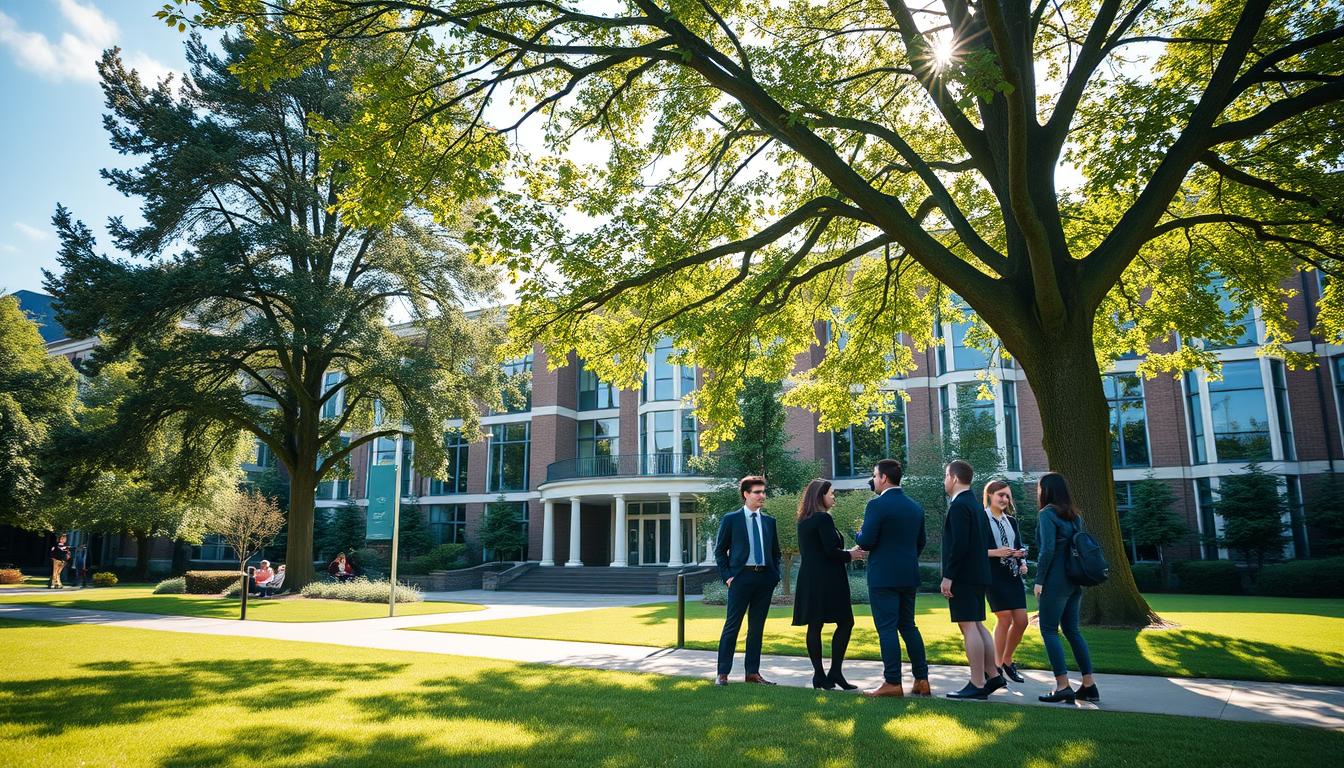
The Holland Scholarship offers a clear, practical way to ease initial costs for those who want to study in the Netherlands. Funded by the Dutch Ministry of Education along with leading research universities and universities of applied sciences, it grants €5,000 in the first year. This support helps cover travel, housing deposits, or other start-up expenses.
Many recipients use the award to access top universities that focus on strong academics and innovative research. The program highlights the country’s commitment to global education and invites diverse perspectives into campus life.
Prospective applicants should note the award is intended to offset early costs rather than pay full tuition. It acts as a stepping stone toward a broader plan for financing higher education abroad.
Understanding the Holland Scholarship for international students
This grant helps non-EEA applicants cover initial costs when they enroll at Dutch higher education institutions.
The Dutch Ministry of Education, Culture and Science provides primary funding and works with participating Dutch research universities and universities of applied sciences.
Top research universities, such as the University of Groningen, and institutions like Fontys take part. A full list of participating universities and university applied sciences appears on the official Nuffic website.
- The ministry education teams up with research universities and universities applied sciences to offer this aid.
- The award targets non-EEA learners who plan a bachelor or master degree at a qualifying institution.
- Applicants must not already hold a Dutch degree and must apply to a participating dutch institution for the 2026-2027 year.
- Programmes span research and applied sciences fields, so many disciplines are covered.
- Prospective applicants should review each university applied’s application pages and requirements on the official website.
Eligibility criteria and financial requirements
Eligibility depends on nationality, prior degrees, and a clear financial plan. Applicants must prove they meet residency rules and can fund the remainder of their studies.
Nationality and residency status
To qualify, an applicant must hold a non-EEA nationality and must not already have a degree from a Dutch higher education institution. Each participating dutch university applied sets specific deadlines and checks on the chosen programme.
Financial planning and scholarship amounts
The award is typically €5,000 in the first year of a bachelor master programme, though some institutions may offer up to €15,000 for select tracks.
- Applicants must submit a Statement of Financial Resources to show realistic funding.
- The ministry education requires integrity and schools follow strict selection rules.
- Verify eligibility on the official university website for the 2026-2027 year.
- This grant does not cover full tuition; students should budget housing, travel, and living costs.
Navigating the application process for Dutch institutions
A clear step-by-step approach helps applicants navigate university portals and meet key deadlines. The portal for the 2026-2027 academic year opened on 1 November 2025, so candidates should act early.
Steps for submitting your application
Follow these actions to apply scholarship and complete your application correctly.
- Log in to your OSIRIS Online Application account and find the form for your chosen programme. Look for the NL Scholarship link on the dashboard.
- Check the target university applied website for specific requirements and required documents for a master degree. Each institution lists its own deadlines and checks.
- Submit all materials well before the 1 February deadline at 23:59 CET. Late submissions are generally not accepted by participating research universities.
- Ensure you apply to a listed university applied for the 2026-2027 year so the application is eligible. The university will assess academic record, motivation, and financial plan quality.
- By applying early, the institution can request corrections or missing proofs, improving the chances to apply scholarship successfully.
Tip: Keep copies of every upload and verify the dashboard status. Small oversights can delay evaluation and affect award decisions.
Conclusion
The award serves as a practical bridge toward study at competitive Dutch universities and research hubs.
Applicants who review requirements carefully and meet deadlines increase their chance to win a scholarship and cover early costs.
This funding option and other scholarships reflect a strong national commitment to quality education and global exchange.
Prospective applicants should gather key information early, prepare clear documents, and follow each university’s guidance to avoid delays.
Ultimately, the grant helps motivated learners start their academic journey and join vibrant research communities at leading universities.
FAQ
What is the Holland Scholarship explained: affordable study opportunities in the Netherlands?
The Holland Scholarship is a government-supported grant that helps students cover part of tuition and initial living expenses when they enroll in Dutch higher education. It applies to bachelor’s and master’s degrees at participating research universities and universities of applied sciences. Applicants should consult the official website of the institution they plan to attend for exact award amounts and participating programmes.
How does understanding the Holland Scholarship for international students help applicants?
Understanding eligibility rules, application deadlines, and the roles of Dutch research universities and universities of applied sciences lets applicants target programmes that participate in the scheme. It also clarifies whether the grant is combined with other institution-based support, and how the Ministry of Education, Culture and Science influences national funding priorities.
Who is eligible under nationality and residency status rules?
Eligible candidates must hold a nationality outside the European Economic Area and meet residency requirements set by the university. Some research universities and universities of applied sciences restrict the grant to those who apply directly to a full-degree programme and do not already hold Dutch higher education diplomas.
What financial planning and scholarship amounts should applicants expect?
Award sizes vary by institution and year, typically covering a portion of tuition or a fixed contribution toward first-year costs. Applicants should prepare a detailed budget including tuition, housing, health insurance, and living expenses. Universities list exact amounts and payment conditions on their financial aid pages.
What are the main steps for submitting your application to Dutch institutions?
Steps generally include selecting a participating programme, completing the university application (often through Studielink), uploading required documents, and applying separately for the grant if the university administers it. Deadlines differ by institution and programme, so candidates must track both admission and scholarship dates.
Can applicants apply to both research universities and universities of applied sciences?
Yes. Candidates can apply to either type of institution, but should confirm that each chosen programme participates in the grant scheme. Entry requirements and course structure differ between academic research universities and practice-oriented universities of applied sciences.
Are bachelor and master degree seekers treated differently?
Both bachelor and master applicants may qualify, but eligibility and award rules can vary. Some institutions limit support to first-year students or to those enrolling in a full degree programme. Master applicants should verify research university criteria and any programme-specific funding options.
Does previous study in the Netherlands affect eligibility?
Prior Dutch higher education can disqualify some candidates. Many institutions require applicants not to hold a prior degree from the Netherlands. Applicants must check individual university policies to confirm how previous study or residency impacts eligibility.
Where can applicants find authoritative application information and deadlines?
The best sources are the official websites of participating universities, the national education ministry pages, and programme-specific admissions guides. Universities publish application steps, eligibility checks, and scholarship application forms that reflect current yearly requirements.
Are there additional funding options available alongside this grant?
Yes. Students can explore institution scholarships, tuition waivers, or research grants at Dutch research universities and universities of applied sciences. Private foundations and government loan schemes may also supplement study budgets; applicants should contact university financial aid offices for tailored advice.
What documents are commonly required during the application?
Typical documents include proof of nationality, secondary or higher-education transcripts, a motivation letter, proof of English proficiency, and a valid passport. Research universities may request academic references or a research proposal for master programmes.
How are decisions communicated and when are funds disbursed?
Universities notify applicants of scholarship decisions by email or their application portal. Payment schedules differ: some institutions credit the grant to tuition invoices, while others disburse funds directly to students at the start of the academic year. The university provides exact timelines.
Who should applicants contact with questions about eligibility or application status?
Applicants should contact the admissions or international office of the specific university or university of applied sciences where they applied. These offices handle queries about degree requirements, deadlines, and financial planning. The national Ministry of Education, Culture and Science provides policy-level information but defers case questions to institutions.